Roots
The port years
Taverns, patios, candombe
- When19th century
- WhereSan Telmo, La Boca
- SoundSmall groups
Guides
Language
Currency
Look up datesfrom $39 · cancel without payingSpot your stop
View 39 stops
Choose a route, then tap a pin or stop for its note and a Google Maps link.
La Boca's street museum of painted conventillos, the shared homes of Genoese immigrants; nearby restaurants stage tango shows.
Google MapsThe singer Edmundo Rivero bought this old San Telmo corner in 1969 and made it a tango house.
Google MapsThe oldest café in the city, open since 1858; jazz and tango play in its basement.
Google MapsFounded in 1990 on Avenida de Mayo: the World Tango Museum, dance rooms and a 3-year course.
Google MapsGardel and Razzano signed their first record deal here in 1917; the café reopened in 2007.
Google MapsThe café at San Juan and Boedo where Homero Manzi wrote Sur, in 1948.
Google MapsGardel bought this house in 1927 for his mother; the museum closes on Tuesdays.
Google MapsA short street with 6 portraits of Gardel painted on shop shutters.
Google MapsA statue of the Zorzal Criollo beside the Abasto, unveiled in 2000.
Google MapsGardel's tomb, where visitors leave lit cigarettes in the statue's hand, and Aníbal Troilo's.
Google MapsThe arena where the city mourned Gardel when his remains came home in 1936.
Google MapsA bellows-shaped sculpture 3.5 metres high in Puerto Madero, unveiled in 2007.
Google MapsGardel was a regular at these races and owned a horse, Lunático.
Google MapsFounded in 1912; its first floor became a milonga hall in the 1970s.
Google Maps
The oldest café in the city, open since 1858; jazz and tango play in its basement.
Google MapsA small San Telmo tango bar, opened on 31 January 1967, that also sells a show with a first class.
Google MapsThe singer Edmundo Rivero bought this old San Telmo corner in 1969 and made it a tango house.
Google MapsGardel and Razzano signed their first record deal here in 1917; the café reopened in 2007.
Google MapsThe café at San Juan and Boedo where Homero Manzi wrote Sur, in 1948.
Google MapsA tango house on the corner of Perú and Moreno, in the old colonial quarter.
Google MapsA San Telmo tango venue on Balcarce street, open since 1982.
Google MapsA large dinner-show hall on the riverside avenue of Puerto Madero.
Google MapsA Belle Époque hall on Florida street, opened in 1915 and now named for the composer.
Google MapsIntimate café-concert shows inside an old house in the historic quarter.
Google MapsA San Telmo hall on Defensa that the city counts among its best-known tango spaces.
Google MapsA downtown theatre for tango dinner shows, on Cerrito near the Obelisco.
Google MapsA large dinner-show hall south of the centre, in Barracas.
Google MapsThe stage show inside the Faena Hotel in Puerto Madero, one of the city's fancier options.
Google MapsSan Telmo's old square: a Sunday antiques fair, with tango among the street performers.
Google MapsLa Boca's street museum of painted conventillos, the shared homes of Genoese immigrants; nearby restaurants stage tango shows.
Google Maps
Palermo dance club: milonga on Wednesdays, Saturdays and Sundays from 20:00, and La Viruta Tango AR Luis Solanas on Mondays, Tuesdays and Saturdays from 19:00.
Google MapsA Balvanera hall at Riobamba 416: Cachirulo on Tuesdays and Saturdays from 21:00, Tango Camargo from 13:00 on Mondays, Thursdays and Saturdays.
Google MapsDowntown ballroom on Maipú: Parakultural on Tuesdays and Fridays and Malena on Saturdays, each from 22:00.
Google MapsSan Cristóbal club: Yira Yira on Fridays from 21:00, La Porteña on Sundays from 18:00.
Google MapsVilla Crespo sports club: El Motivo on Mondays and La 2x3 on Thursdays, both from 20:00.
Google MapsAn old corner bar in Barracas where Esquina Arrabal dances on Saturdays from 20:00.
Google MapsA La Boca theatre with a Saturday milonga from 20:00.
Google MapsAlmagro: Tango Queer on Fridays from 21:00, Tangótica on Tuesdays from 19:00.
Google MapsA Villa Crespo cooperative on Corrientes where La Isla Queer meets on Fridays from 20:00.
Google MapsMonserrat hall where Milonga en lo de Balmaceda starts on Thursdays at 22:00.
Google MapsA Recoleta room with an afternoon dance, A Media Luz, on Saturdays from 15:00.
Google MapsSan Telmo arts space with La Yuyú, an informal milonga, on Tuesdays from 20:00.
Google MapsChampagne Tango Club dances here on Monday afternoons from 15:00.
Google Maps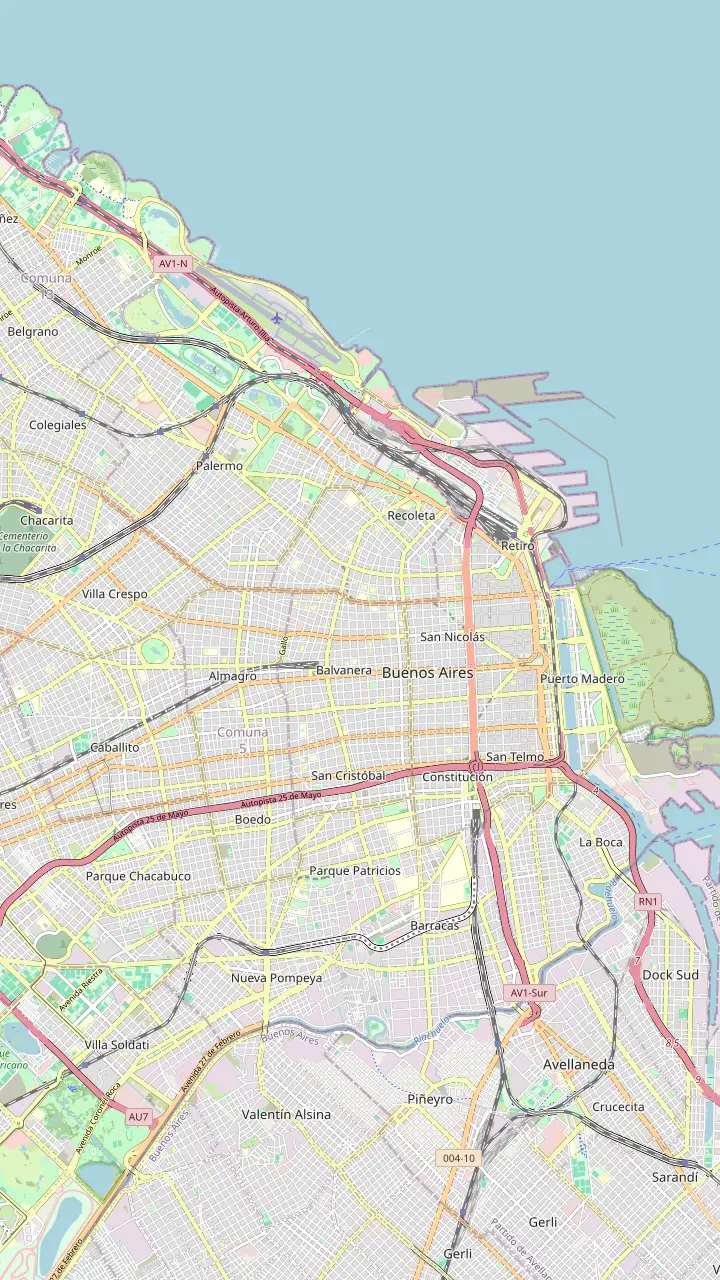
Founded in 1990 on Avenida de Mayo: the World Tango Museum, dance rooms and a 3-year course.
Google MapsA school on Florida street with a Saturday práctica from 18:00.
Google MapsPalermo dance club: milonga on Wednesdays, Saturdays and Sundays from 20:00, and La Viruta Tango AR Luis Solanas on Mondays, Tuesdays and Saturdays from 19:00.
Google MapsA Balvanera hall at Riobamba 416: Cachirulo on Tuesdays and Saturdays from 21:00, Tango Camargo from 13:00 on Mondays, Thursdays and Saturdays.
Google MapsAlmagro: Tango Queer on Fridays from 21:00, Tangótica on Tuesdays from 19:00.
Google MapsSan Telmo arts space with La Yuyú, an informal milonga, on Tuesdays from 20:00.
Google MapsA small San Telmo tango bar, opened on 31 January 1967, that also sells a show with a first class.
Google MapsMap data by © OpenStreetMap contributors
Tango was born among sailors' taverns, crowded tenements and African drums, and grew into the sound of a city. Follow its story from the port to the concert hall, and find the places where it happened.
Editorial team, tangolessonbuenosaires.click · Updated November 12, 2026 · Reading: 8 min
Tango clásico in Buenos Aires grew from the bottom of society up. UNESCO credits the urban lower classes of Buenos Aires and Montevideo, on the shores of the River Plate, with developing it.5 The city tourism board says the dance took shape in the working-class immigrant districts in the mid-19th century, while Argentina's national culture authority places its emergence in the port areas towards the end of that century.6,7
Both accounts point to the same world: the waterfront, the taverns and the shared courtyards of San Telmo and La Boca, which the tourism board names as the first home of the music and the dance, long before it reached the ballrooms and the stages.8 In La Boca, the wood and sheet-metal houses of Caminito still show what a conventillo looked like, the communal homes that Genoese immigrants built from the late 19th century.9
Those houses were crowded, noisy and full of music from many countries, Italian songs next to Spanish guitars and African drums. Neighbours shared kitchens, washing lines and patios, and every patio could become a dance floor. Caminito itself was rescued in the 1950s, when neighbours and the painter Benito Quinquela Martín turned the tenements into a street museum.10 Walk it by day to picture the world tango came from, and look up at the balconies and the bright patched walls.
Places in the story
| Place | Year | What happened |
|---|---|---|
| Café Tortoni | 1858 | Founded; now the oldest café |
| Café de los Angelitos | 1917 | Gardel and Razzano signed |
| Gardel's house, Abasto | 1927 | Bought for his mother |
| Luna Park | 1936 | Memorial for Gardel |
| Esquina Homero Manzi | 1948 | Sur written at a table |
| Bar Sur | 1967 | Opens in San Telmo |
| El Viejo Almacén | 1969 | Becomes a tango house |
| National Tango Academy | 1990 | Created on Avenida de Mayo |
| Tango Monument | 2007 | Unveiled in Puerto Madero |
Dates from the city's tourism pages and city government sources.22,13,23,24,14,25,26,27,28
Before tango there was candombe, a rhythm born in Africa that made its home in the streets of Buenos Aires.15 The word was first written down in the 18th century, for the music, dance and Bantu-Catholic religion of enslaved Angolan and Congolese people in the River Plate.11 After Argentina abolished slavery in 1853, African communities gathered in Monserrat and San Telmo, keeping a tradition the tourism board calls a pivotal influence on tango.12
Argentina's culture authority goes further: it names the milonga, candombe and other genres of African descent as a significant part of tango's birth.7 It also admits that as the dance became fashionable with the upper classes and abroad, that African influence was minimised and often left out altogether.16 The City of Buenos Aires now describes tango as the fusion of Afro-American, criollo and European immigrant contributions.1
You can still hear the drums. Candombe groups practise in San Telmo's streets on Saturday and Sunday afternoons.17 The larger llamadas, parades of drum troupes, take place at the start of spring in La Boca, on the first weekend of November in Monserrat and on the first weekend of December in San Telmo.18 Standing in the crowd as the troupes pass is the most vivid history lesson the city offers, and it costs nothing.
Tango today
The other half of the story arrived by ship. The city's own tango page describes a fusion of African culture with gaucho and native traditions, enriched by European immigrants, mainly Spanish and Italian, and by settlers from the Middle East.31 UNESCO sums up that blend as a single identity formed from European newcomers, the descendants of enslaved Africans and the criollos of the region.30
Cafés gave that mix somewhere to meet. Founded in 1858, Café Tortoni is the city's oldest café, and Carlos Gardel kept a reserved table there.22,32 Café de los Angelitos on Rivadavia was where, one night in 1917, the duo of Gardel and José Razzano was signed by the artistic director of the Odeón record label.13 Confitería La Ideal, from 1912, later gave its first floor to milongas, and its restored dome still crowns the room.33,34
By the 1930s, according to the tourism board, tango had conquered Buenos Aires and then the world, carried by romance, nostalgia and an embrace the tourism board itself describes as daringly close.35 Several of the cafés where that story played out still serve coffee today, which makes a history walk through the centre easy and rewarding, with a cortado at each stop and a museum or a monument in between.
Plan a history day
Tell us what draws you to tango and we suggest a stop.
If I love the songs and the voice
Gardel's house in the Abasto
Gardel bought it in 1927 for his mother; it is now his museum.23
If I want the African roots
San Telmo on a weekend
Candombe groups practise in its streets on Saturday and Sunday afternoons.17
If I want all of tango's history under one roof
The World Tango Museum
It traces tango from 1850 to the present, at the National Tango Academy.29
If I want a photo of the old port
Caminito in La Boca
Painted conventillos of Genoese immigrants, rescued in the 1950s.10
If I want to feel it, not read it
A private lesson
A private hour in a studio close to where you sleep, with a dancer as teacher.
Eras of tango
Roots
Taverns, patios, candombe
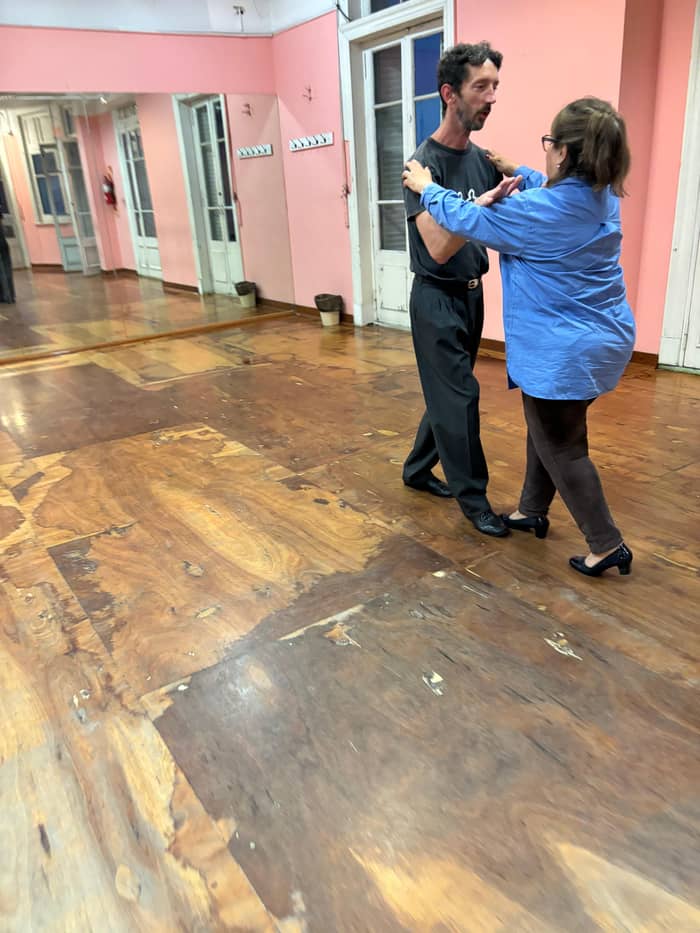
Dance halls
Big orchestras, crowded floors
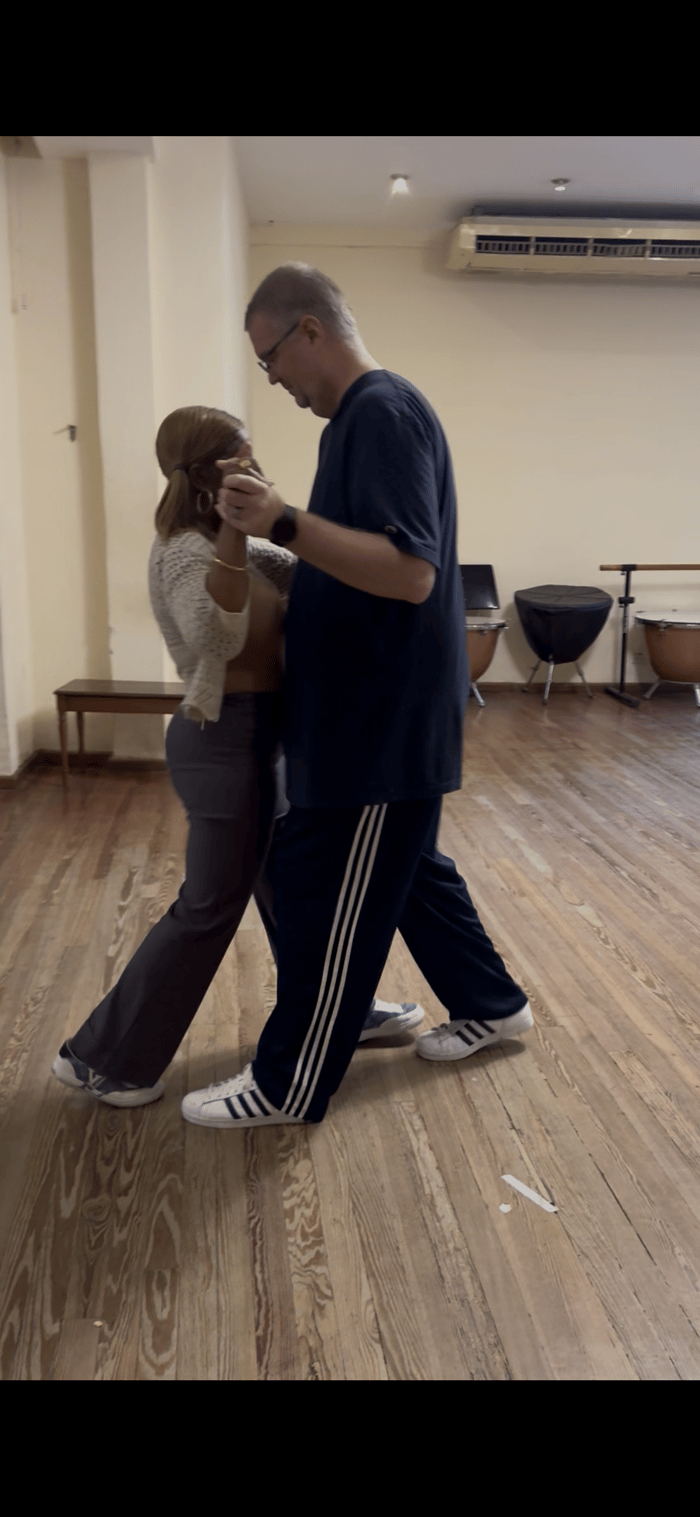
Piazzolla
Listening, not only dancing
The bandoneon, a square button accordion with a bellows, gives tango its unmistakable voice. Porteños say it does not play but cries, and once you have heard it in a dark café you will understand why.78 The most prized instruments were made in Germany before the Second World War, and keeping them alive is skilled work.79 Each of the 276 reeds must be tuned individually.80 A good old bandoneon is a treasure its owner rarely sells.
Argentina celebrates the instrument every year on 11 July, its National Bandoneon Day, a date worth knowing if you love the sound.81 In Puerto Madero, the Tango Monument, an abstract bellows shape 3.5 metres high that echoes a bandoneon, was unveiled in 2007 on Music Day.28 Its abstract form turns the instrument into a public symbol of the music, and it makes a good stop on a riverside walk past the old docks of Puerto Madero.
The bandoneon also shaped the orchestras of the golden age. The tourism board places that age between the 1920s and the 1950s, when large orquestas típicas came to define the tango sound.2 Several bandoneons played side by side, with piano, violins and double bass, and the dancers on the floor followed their phrasing. When you hear a recording from that era in a milonga today, listen for the bandoneons breathing together.
Walk the story
Choose a walk or a group class and your group size to see starting totals.
Compare 3 choices
Choose a walk or a group class and your group size to see starting totals.
≈
View≈
View≈
ViewStarting prices on GetYourGuide, exchanged at the ECB reference rate. The booking page gives the exact price.
From candombe to UNESCO
18th century
The word first appears in the River Plate.11
1853
African communities gather in Monserrat and San Telmo.12
1917
Signed at Café de los Angelitos.13
1935
A plane crash in Medellín, Colombia.3
1948
Homero Manzi at San Juan and Boedo.14
2009
UNESCO lists tango as intangible heritage.4
The city tourism board calls Carlos Gardel the most famous tango singer of all.82 His birth is still argued over, between Uruguay in 1887 and Toulouse, France, in 1890.83 What is certain is that he came to Buenos Aires as a boy with his mother and grew up around the Abasto market in Balvanera.84 In 1927 he bought a house on Jean Jaurès street for his mother, Berta, which is now the Carlos Gardel House Museum.23
Gardel loved the horse races at Palermo, owned a horse called Lunático and dedicated the tango Leguisamo solo to it.71 His death in a plane crash in Medellín, Colombia, in 1935, shocked the country.3 When his remains came home in 1936, a huge memorial was held at the Luna Park arena.24 He lies in Chacarita Cemetery, where the composer Aníbal Troilo is also buried, and his tomb is one of the most visited there.69,85
Visitors still leave lit cigarettes in the hand of his statue at Chacarita.70 In the Abasto, Pasaje Zelaya has 6 portraits of him painted on shop shutters, and a statue of the Zorzal Criollo, the Creole thrush, as Argentines call him, has stood by the old market since 2000.66,68,67 The house museum keeps his personal items and photographs, and organises concerts and film screenings in the rooms where he lived.86
Video
Carol Meier Narrator on YouTube · The video waits until you tap play to load.
Among this mix of European immigrants to the region, descendents of African slaves and the natives of the region known as criollos, a wide range of customs, beliefs and rituals were merged and transformed into a distinctive cultural identity
Your tango history day
The golden age was also the age of the dancers. Argentina's heritage register says the close milonguero style was born on the packed floors of the 1940s, out of the need to dance in very little space.87 The poets were busy too: at a café table on the corner of San Juan and Boedo, Homero Manzi wrote the tango Sur in 1948, with music by Aníbal Troilo.14 The café has carried Manzi's name since 1981.88
From the 1960s, tango moved into concert halls, with richer orchestration and more dramatic arrangements.89 Astor Piazzolla led that change and made tango famous around the world once more, as music to listen to as well as to dance.90 Meanwhile the city kept its tango houses: Bar Sur opened in San Telmo in January 1967, and the singer Edmundo Rivero bought El Viejo Almacén in 1969 to make it a tango venue.25,26
Tango has kept changing since. Today you can hear orchestras that recreate the golden-age sound alongside tango punks and electronic acts that push the genre in new directions, often in the same week and the same neighbourhood.91 The Usina del Arte and the CCK often host free concerts, so you can hear contemporary tango for nothing.77 The milongas, meanwhile, still dance by the rules of the 1940s in halls across the city.92
In 2009 UNESCO added tango, shared by Argentina and Uruguay, to its world list of intangible heritage.4,5 Argentina added the milonguero social dance to its own register of intangible heritage on 15 January 2019, recognising the social style danced in its halls.93 The National Tango Academy, created in 1990 on Avenida de Mayo, houses the World Tango Museum, which follows the story from 1850 to the present.27,29
The Carlos Gardel House Museum, at Jean Jaurès 735, opens from 11 to 19 h on Mondays, Wednesdays, Thursdays and Fridays and from 11 to 20 h on weekends and holidays, and closes on Tuesdays.94,65 General entry for foreign visitors is ARS 10,000 and ARS 2,000 for residents with an ID, and children under 12 go free.75,95 The tourist board's free Saturday walk, Tango and the Abasto Market, covers the same streets.76
History reads better with your own feet on the floor. The city's August festival now spreads across more than 50 venues in 34 neighbourhoods, with almost 800 couples from more than 45 countries in the Mundial.19 If you want to join in, tango dance classes in Buenos Aires start with the same walk and embrace the milongueros danced in the 1940s, and a private hour with a professional dancer near your hotel is an easy first step.87
FAQ
Argentina's culture authority names the milonga, candombe and other African-descended genres as a significant part of its birth.7
The private hour sold here is held in a studio near your hotel; schools teach daily across the city.96
Sources
Learning tango in Buenos Aires? Ask a real person here.