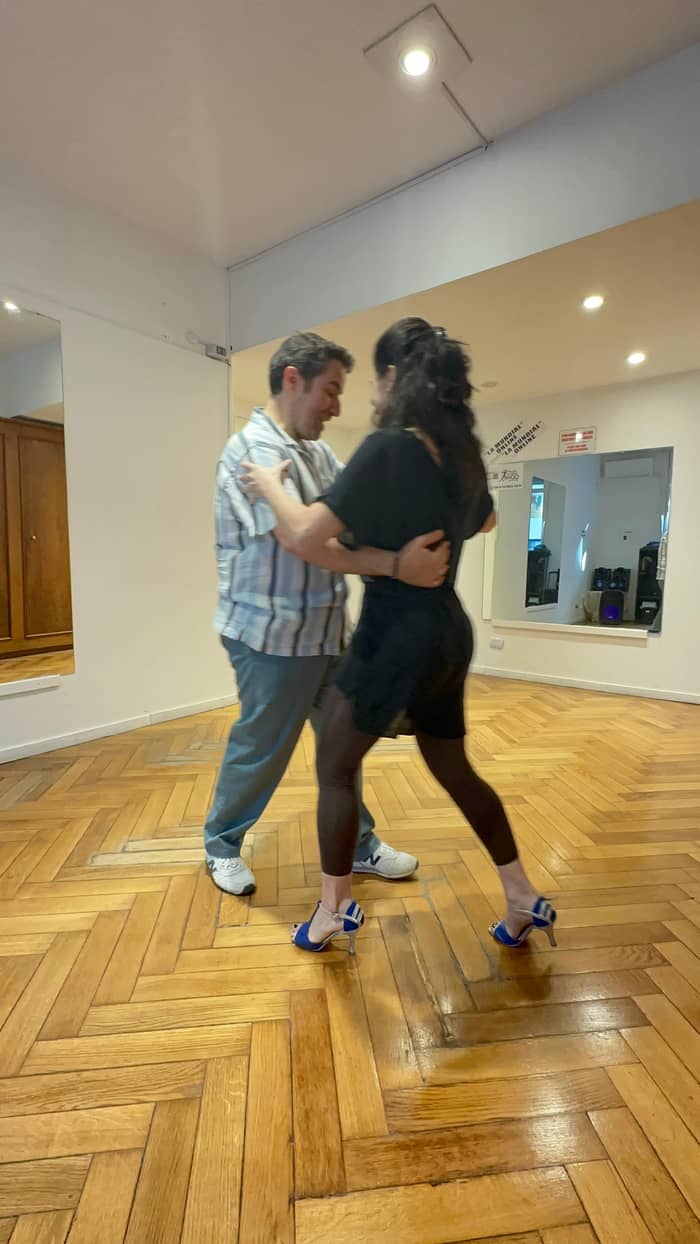
Most adaptable
Private hour
Any level, any pairing
- Length1 hour
- LanguagesSpanish, English
- WhereNear your hotel
Guides
Language
Currency
Look up datesfrom $39 · cancel without payingDeciding made easy
Private tango lesson in Buenos Aires
★ 4.9 · 304 written reviews
Brief answer
Buenos Aires tango classes welcome everyone: solo travellers and couples in private lessons, LGBTQ dancers at queer milongas, families, and older beginners at afternoon milongas.
Who can join
A quick quiz, one class
Say who is dancing and how you like to learn, and a class appears with its starting price.
Suited to you
from $39
1 hour with a professional dancer in a studio near your hotel; all levels, taught in Spanish and English.
Suited to you
from $30
2 hours with other learners, mate and snacks; taught in English, Portuguese and Spanish.
Suited to you
from $96
3.5 hours: a shared lesson, then a real milonga in a group of up to 6, with hotel pickup.
Suited to you
from $135
4 hours: a private 1-hour lesson, then a milonga with your own guide and hotel pickup.
Tango in Buenos Aires is danced by teenagers and grandparents, by couples and strangers, by men with men and women with women. Here is how to find the class that fits who you are and how you travel.
Editorial team, tangolessonbuenosaires.click · Updated November 12, 2026 · Reading: 8 min
In brief
Buenos Aires tango classes are not only for couples in love or young professionals with perfect posture. UNESCO describes the tango community as musicians, professional and amateur dancers, choreographers, composers, songwriters and teachers, a broad family rather than a closed club.4 Argentina's heritage register adds that regular dancers, occasional dancers and tourists share the same milonga floors.5
That mix is what makes a class here different. In one evening you may be paired with a retired engineer who has danced for decades, a student from the suburbs and a visitor from Seoul. Teachers are used to it. The private lesson sold on this site, for example, is described for every level, from first-timers and couples to families with children and dancers who already know the basics.
The trick is to choose a format that suits your situation rather than an imaginary ideal student. This guide walks through the most common situations, solo travellers, couples, LGBTQ dancers, families, older beginners, people with limited mobility and experienced dancers, and suggests where each of them will feel most at home. The quiz further down sums it up in a moment, and the calculator after it prices the shared options for your group.
Who should book what
| Who | Best start | Why it works |
|---|---|---|
| Solo traveller | Private hour | The teacher is your partner |
| Couple | Private hour for both | Shared vocabulary for the trip |
| LGBTQ dancers | Queer milonga class | Open roles from the start |
| Family with kids | Family lesson | Listed for families with kids |
| Older beginner | Afternoon milonga | Starts as early as 13:00 |
| Experienced dancer | Práctica and milongas | Local floors and teachers |
Formats and hours from the listings and the city milonga register.1,2,12
If you travel alone, a private class removes the biggest worry, finding a partner, because the teacher dances with you. It is also the quickest way to feel a clear lead or follow from someone who dances every week, and to ask the questions you would never ask in front of a group. In a 2-hour group class with mate you dance with other learners, so you meet a room of fellow beginners, which is pleasant on a solo trip.
Couples face a different question: learn together, or learn the roles separately first? Learning together builds a shared vocabulary you can use for the rest of the holiday and at home. Taking turns dancing with the teacher helps each of you feel the role from the other side. Ask for a little of both, and for a short routine to repeat in the hotel room. Arguments about who stepped on whom are part of the fun, and teachers have heard them all.
A guided milonga night suits both kinds of traveller, and first-timers in particular. The small-group night opens with a shared lesson and then moves on to a working milonga alongside a guide, with no more than 6 guests, so neither a solo traveller nor a couple has to walk into an unfamiliar hall alone. Hotel pickup and drop-off are part of it, which matters if you are not sure of the neighbourhood after dark or do not speak Spanish yet.
Pick your hour
Start times of the 82 milongas in the city of Buenos Aires register, counted on 11 November 2026; 16:00 and 17:00 starts are left out.2
The city tourism board calls Buenos Aires the top destination in Latin America for LGBT travellers, and its calendar includes Buenos Aires Diversa, the pride parade and the International Queer Tango Festival.14,15 Argentina legalised same-sex marriage in 2010, the first country in Latin America to do so.8 That openness reaches the dance floor, and gay tango lessons in Buenos Aires are easy to find.
The city's milonga register lists dedicated nights. Tango Queer meets at the Centro Cultural Macedonia in Almagro on Fridays from 21:00, and La Isla Queer at La Quince, a cultural cooperative on Corrientes in Villa Crespo, on Fridays from 20:00.1,11 Both are friendly places to take a class or simply to dance with whoever you like, in whichever role you like. Arrive early for the class, when the floor is calm and introductions are easy.
The city government has supported the scene directly. In 2019 it held its first Tango Queer meeting within Buenos Aires Pride week, with a class focused on the versatility of the leading and following roles.10,16 Casa Brandon in Villa Crespo, a house of art and culture popular with the LGBT community, is another address to know.17 Check each venue's social media before you go, because queer nights change hall and hour more often than classic milongas.
Easy starts
Most adaptable
Any level, any pairing
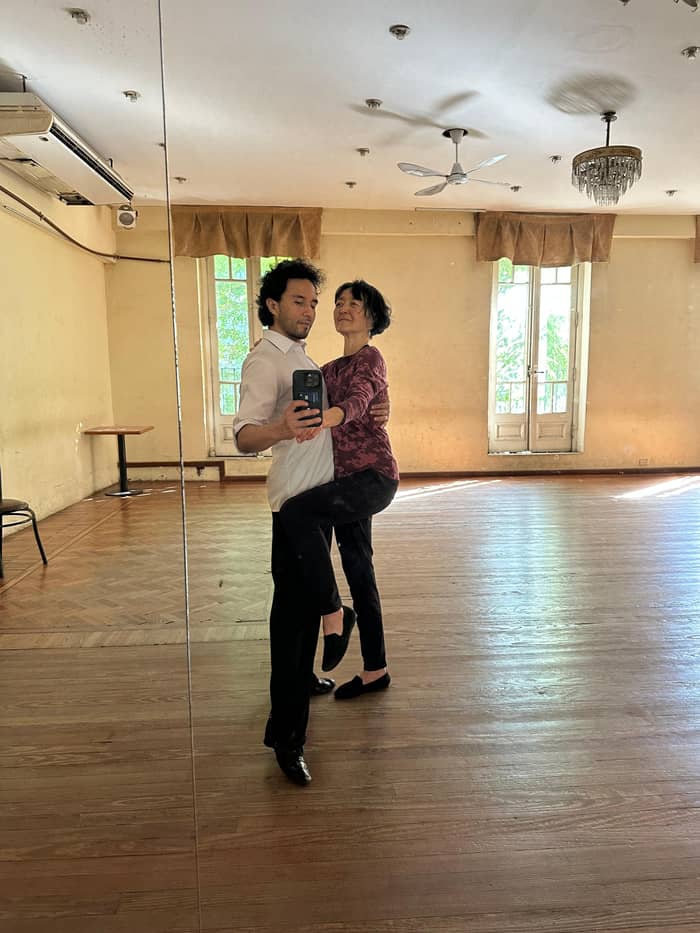
Social
Rotate partners, share mate
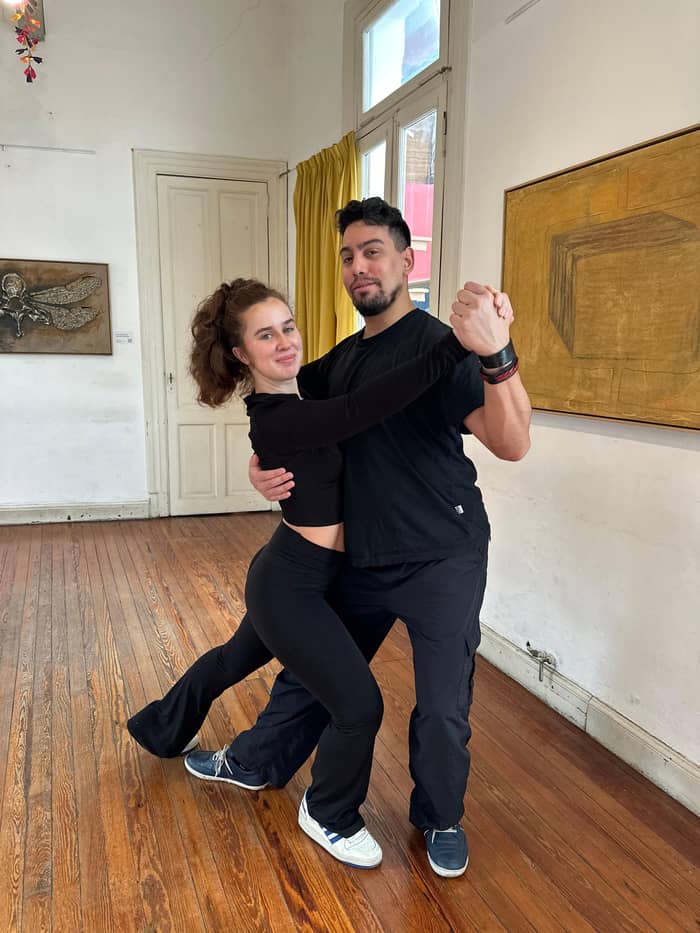
No walking in alone
Lesson, then a real milonga
Traditional tango assigned roles by gender: in the milonguero style recorded in Argentina's heritage register, the man leads.6 Queer tango has questioned that division. A city-backed screening on the subject described how LGBTIQ dancers took up the dance as a tool of communication and broke the fixed roles that used to limit it.19 Tell your teacher which role you would like to learn; a good teacher will not assume it from your gender.
For a beginner, the choice is practical. Leaders propose the steps and steer through the room; followers listen through the embrace and answer with precision and style. Both are equally hard to do well. If you are unsure, start with the role you would like to dance at a milonga, and try the other for a few minutes in each class to understand your partner. Dancers who know both roles understand what their partner feels, and dance better for it.
In a private lesson you can say this at the start and the teacher will adapt. In group classes, tell the teacher early if you want to learn the role traditionally associated with the other gender, so the pairs can be arranged. At the milonga, the cabeceo works the same way for every pairing: eye contact first, then a small nod.20,21 Nobody needs to explain who leads before the music starts.
Price your class
Pick a shared format, add your group size and see starting prices. To price the private hour, open its booking page with your real number of dancers.
Compare 3 choices
Pick a shared format, add your group size and see starting prices. To price the private hour, open its booking page with your real number of dancers.
≈
View≈
View≈
ViewStarting prices on GetYourGuide, exchanged at the ECB reference rate. The booking page gives the exact price.
An open floor
1940s
Born on crowded floors in the golden years.6
2009
UNESCO inscribes tango on its intangible heritage list.7
2010
Argentina legalises same-sex marriage.8
January 2019
The milonguero dance enters the national heritage register.9
2019
The city's first, within Pride week.10
Today
Families can learn together. The private lesson is listed for families with kids as well as couples and beginners, and a teacher can turn the hour into walking games with the music. Keep the lesson in the morning or after a nap, when children have the most energy and patience. Combine it with a visit to the Carlos Gardel House Museum, where entry is free for children under 12, retirees, university students and people with disabilities plus a companion.18
Older beginners usually worry about late nights rather than about the steps, and the daytime scene is the answer. On our count of the city's register on 11 November 2026, 18 of its 82 milongas start before 19:00, and the earliest begin at 13:00.2 Tango Camargo at El Beso opens its floor at 13:00 on Monday, Thursday and Saturday afternoons, and A Media Luz at La Comedia in Recoleta at 15:00 on Saturdays.13,22 Both suit dancers who would rather be home by dinner time.
Tango asks for balance and attention more than for speed or strength, so starting later in life is entirely possible. Choose a studio with a smooth floor and a chair nearby, keep heels low and ask for short breaks between songs. Champagne Tango Club dances on Monday afternoons from 15:00 at Espacio Riobamba, another daytime door into the social scene.23 Lunch, a nap and a milonga make a gentle day.
Video
BBC Travel Show on YouTube · The video waits until you tap play to load.
That community today includes musicians, professional and amateur dancers, choreographers, composers, songwriters, teachers of the art and the national living treasures who embody the culture of tango
Before you book
Tango is built on walking, which makes it gentler than many dances, but access varies a lot from place to place. Many milongas sit upstairs behind an ordinary door, so call or message ahead if stairs are a problem.24 A private studio near your hotel lets you ask about lifts, floors and chairs before you book the hour. Write your needs in the booking message so the teacher can pick the right room.
For watching, some stage venues are adapted: the show at El Viejo Almacén is listed as wheelchair accessible. The Carlos Gardel House Museum gives free entry to people with disabilities and a companion.18 Seated dancers and wheelchair users can explore tango with a patient teacher, focusing on the embrace, rhythm and upper-body connection, and the music works its magic sitting down too.
If you have a health condition, tell the teacher at the start and set the pace yourself. Pregnant dancers can keep dancing in an open embrace with a careful partner if their doctor agrees. Everyone benefits from water, a towel and a few minutes of rest between songs, and nobody at a milonga expects you to dance every tanda. Tango has no age limit and no ideal body: what matters is the connection with your partner.25
Language is rarely a barrier. The city tourism board notes that private teachers offer tailored classes in different languages.26 The private hour on this site is taught in Spanish and English, the dance-hall lesson in English, Portuguese and Spanish, and the group class with mate in those same languages. Tango classes for tourists in Buenos Aires usually mix languages without fuss.
Experienced dancers come for something else: the best social floors and serious teachers. The Mundial de Tango in August brings professional and amateur couples from more than 45 countries, competing in a salon category and a stage category.27,3 Prácticas such as the Monday session at El Beso from 22:00 let you work on technique with local dancers.12 Bring your own questions: teachers at prácticas are used to fixing one detail at a time.
Whatever your level, a private class with a dancer who goes out at night is the fastest way to adapt your style to the Buenos Aires floor, where space is tight and the embrace is close. The milonguero style itself was born on crowded floors in the 1940s, when couples needed to dance in small spaces.6 An hour with a local can save you a week of guessing, and it often comes with tips on which milongas suit your style.
FAQ
The teacher dances with you in a private lesson, and in a group class you dance with other learners.
Queer tango breaks the fixed roles, and you can ask any teacher to teach you either role.19
The private lesson is listed for families with kids, and the Gardel museum is free for children under 12.18
On our count of 11 November 2026, 18 of the city register's 82 milongas start before 19:00, some at 13:00.2
The private hour is taught in Spanish and English; other lessons add Portuguese.
Some shows are wheelchair accessible; ask milongas and studios about stairs before you go.24
Sources
Learning tango in Buenos Aires? Ask a real person here.